

I Reorganized My Fridge Using a Restaurant Kitchen System
Most fridge-organization advice tells you to “group similar items together” and call it a day. That’s not wrong, but it’s not the reason food spoils either. The real problem is almost always temperature mismatch — putting the wrong food in the wrong zone of a fridge that isn’t actually one temperature throughout.
Professional kitchens don’t organize fridges for tidiness. They organize them around food safety codes, because a health inspector will shut a restaurant down over it. That system — adapted for a normal home fridge — is what actually keeps food fresh longer. Here’s how to set it up, zone by zone, plus the small habits that make the biggest difference.
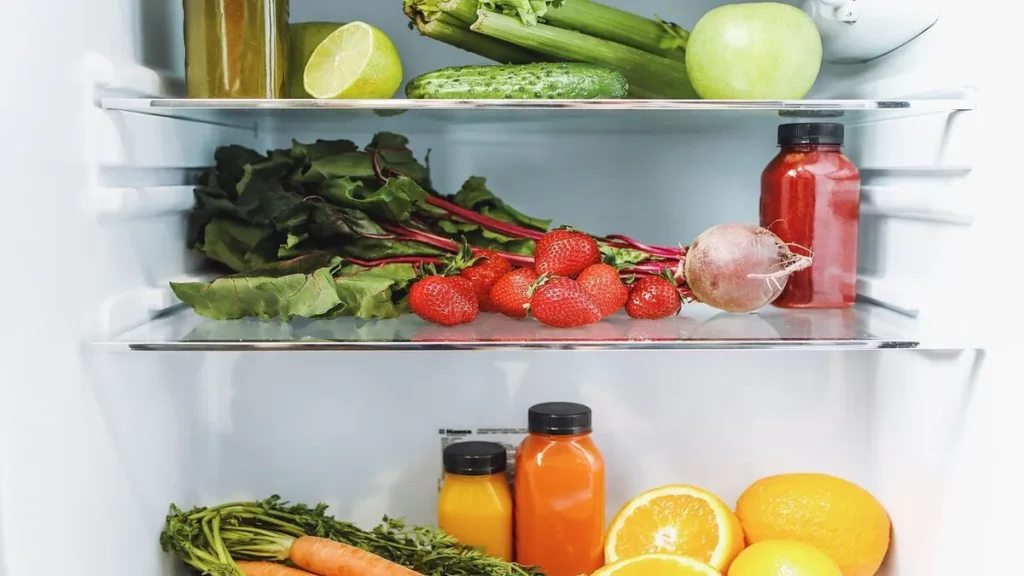
Table of Contents
Why “Just Tidy It Up” Doesn’t Work
A refrigerator isn’t one cold box — it’s several microclimates stacked on top of each other. Cold air is denser than warm air, so it sinks. That means the bottom of your fridge runs several degrees colder than the top shelf, and the door — which loses its seal every time you open it — is the warmest, most unstable zone of all.
If you’ve ever wondered why milk in the door spoils faster than milk on a shelf, or why lettuce goes slimy in a drawer that’s supposed to keep it fresh, this is why. Tidiness didn’t fail you. Zone mismatch did.
Step 1: Empty It and Reset the Baseline
Pull everything out before you reorganize anything — you can’t fix zones you can’t see.
While it’s empty:
- Toss anything expired or questionable. Mold, sour smells, sliminess, or discoloration mean it goes, no exceptions.
- Wipe every surface, including shelf edges, drawer tracks, door bins, and the rubber gasket around the door — that gasket is where spills collect and where the seal (and therefore the temperature) can fail first.
- Sort what’s left into categories as you decide what goes back in: dairy, produce, condiments, drinks, leftovers, raw meat/seafood.
Step 2: Learn Your Fridge’s Real Temperature Map
This is the part most articles skip past. Here’s where each zone actually sits, and why.
Top shelves — the most stable zone. Consistent temperature makes this the right spot for anything ready to eat as-is: leftovers, deli meat, yogurt, and prepared foods.
Middle shelves, toward the back — dairy. Milk, cheese, and butter do best slightly colder and away from the door, where temperature swings happen every time it opens.
Bottom shelf — the coldest point. This is where raw meat, poultry, and seafood belong, always in leak-proof containers, always below anything ready-to-eat, so drips can’t contaminate food you won’t cook first.
Crisper drawers — humidity-controlled, not just “the vegetable drawer.” High humidity slows moisture loss for leafy greens, herbs, and broccoli. Low humidity works better for produce like apples, pears, and peppers that release ethylene gas and ripen faster in a damp environment.
Door bins — the least stable zone. Reserve these for condiments and drinks that don’t spoil easily. Milk and eggs are better off inside, on a shelf, not in the door — despite most fridges being designed with an egg tray built into it.
Step 3: Set (and Verify) the Actual Temperature
Zoning only works if the baseline temperature is correct. Aim for:
- Refrigerator: 37–40°F (3–4°C)
- Freezer: 0°F (-18°C)
Built-in dials are frequently off by several degrees, especially on older units. A five-dollar appliance thermometer left on a middle shelf for 24 hours will tell you the truth — and it’s worth checking twice a year, since seals loosen and compressors drift over time.
Step 4: Put FIFO on Autopilot
Restaurants track inventory with FIFO — First In, First Out — because it’s the simplest way to make sure nothing gets buried until it spoils.
The rule: when you unpack groceries, move older stock to the front and put new stock behind it. That’s it. It works because it removes decision-making — you don’t have to remember what’s old, you just grab what’s closest.
Step 5: Store Produce by Ethylene Behavior, Not Just by Drawer
Some produce ripens itself faster by releasing ethylene gas, and speeds up ripening (and spoilage) in whatever sits near it.
High ethylene producers: apples, pears, bananas, avocados. Ethylene-sensitive produce that spoils faster near them: lettuce, leafy greens, broccoli.
Keep the two groups physically apart, even if that means splitting them across drawers rather than defaulting to “all fruit together.”
Skip the fridge entirely for potatoes, onions, garlic, whole tomatoes, and bananas — cold temperatures degrade their texture and flavor rather than preserving them.
A paper towel placed in a produce container absorbs excess moisture and meaningfully slows down wilting and mold — a small trick that punches above its weight.
Step 6: Make Leftovers Visible, or They Die Quietly
Leftovers fail for one reason more than any other: they’re invisible. Opaque containers shoved toward the back become “mystery containers” nobody wants to open.
Fix it with three habits:
- Use clear glass or plastic containers so contents are visible at a glance.
- Label with the date it was made, not just the food name.
- Keep a dedicated leftovers shelf at eye level, so it’s the first thing you see, not the last thing you remember.
The Overcrowding Trap Nobody Talks About
A full fridge feels efficient. It isn’t. Cold air needs room to circulate — when shelves are packed edge to edge, airflow drops, cooling becomes uneven, and food near the back or in dead pockets spoils faster, even though the thermostat reads normal.
Leave roughly 20–30% of shelf space open. It looks less “stocked,” but it keeps every item at the temperature you actually set.
A Five-Minute Sunday Reset
Doing this once a week, right before grocery shopping, prevents most of the problems above from ever compounding:
- Scan for anything expired or spoiling
- Wipe up spills immediately rather than letting them sit
- Shift older items to the front (FIFO, again)
- Toss wilting produce
- Check what leftovers are still good
- Build your grocery list around what’s actually left
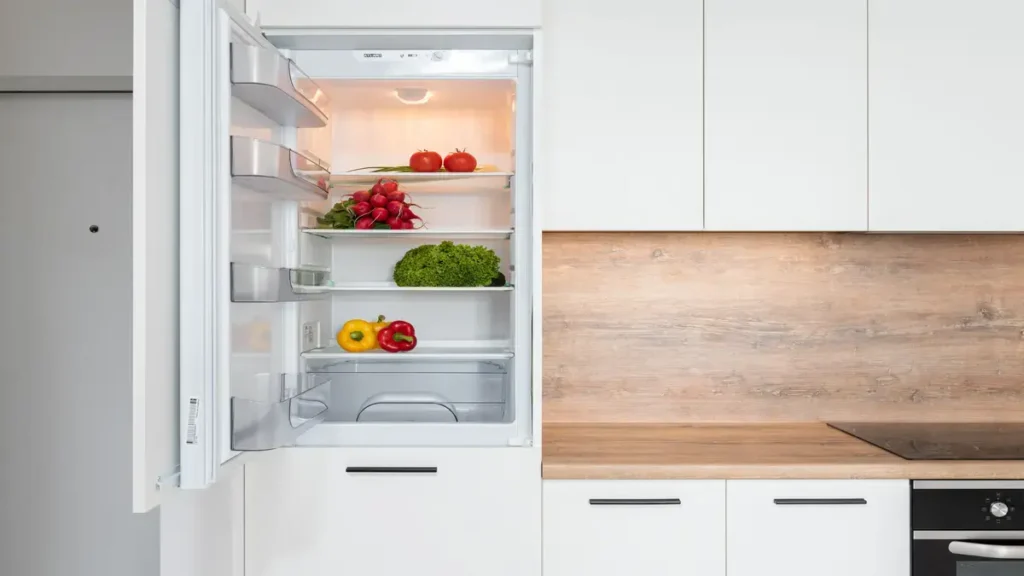
Mistakes That Undo Everything Else
Storing milk in the door. It’s the least stable temperature zone in the fridge — exactly wrong for something that spoils on a schedule.
Washing produce before storing it. Excess moisture speeds up mold. Wash right before you use it, not right after you buy it.
Mixing raw meat with ready-to-eat food. Even sealed containers can leak. Keep raw meat on the bottom shelf, separate and below everything else.
Never check the thermostat. A fridge running just a few degrees warm shortens shelf life across everything in it, and most people never find out until food starts going bad early.
Small Fridge? Adjust the System, Not the Principles
The zoning principles above hold regardless of size — you’re just working with less room to apply them:
- Stackable containers recover vertical space that flat storage wastes.
- Dedicated micro-zones (a “breakfast” bin, a “snacks” bin) prevent a small fridge from turning into a single undifferentiated pile.
- Strip excess packaging the moment groceries come home — cardboard and plastic bulk take up space food doesn’t need.
- Shelf risers add a usable layer without needing a bigger appliance.
Quick Reference Chart
| Zone | Temperature Behavior | Store Here |
|---|---|---|
| Top shelf | Most stable | Leftovers, deli meat, ready-to-eat food |
| Middle shelf (back) | Cold and stable | Dairy — milk, cheese, butter |
| Bottom shelf | Coldest point | Raw meat, poultry, seafood (leak-proof containers) |
| Crisper — high humidity | Moisture-retaining | Leafy greens, herbs, broccoli |
| Crisper — low humidity | Drier air | Apples, pears, peppers |
| Door bins | Least stable | Condiments, drinks — not milk or eggs |
Key Takeaways
- Your fridge has multiple temperature zones, not one — organize around that, not just around tidiness.
- Raw meat goes on the coldest shelf, always below ready-to-eat food.
- Match produce to the correct humidity drawer, and separate ethylene producers from sensitive greens.
- Verify your actual temperature with a separate thermometer — dials lie.
- FIFO (oldest to the front) removes the guesswork that lets food get forgotten.
- Visible, labeled leftovers get eaten; hidden ones get thrown out.
- Leave room for airflow — a packed fridge cools unevenly.
- A five-minute weekly reset prevents most of this from ever becoming a problem.
Source: Academy of Nutrition and Dietetics, Food Safety Resources — eatright.org
Pingback: The Proven Natural Fixes For A Fresh-Smelling Home